
Blog

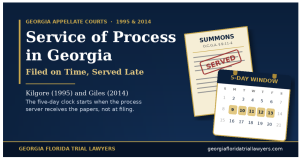
Service of process in Georgia – the five-day rule under Kilgore and Giles

Filed on Time, Served Late: Georgia’s Service of Process Rules Under Kilgore and Giles

By Drew Gilliland, Georgia Florida Trial Lawyers Most people...

Read More

Official immunity and false arrest by police in Georgia – Bateast v. DeKalb County, 258 Ga. App. 131 (2002)

Arrested After Showing Your ID: What Bateast v. DeKalb County Says About Police Officers, Official Immunity, and Actual Malice

By Drew Gilliland, Georgia Florida Trial Lawyers When a...

Read More

Offer of settlement in Georgia – CaseMetrix v. Sherpa Web Studios, O.C.G.A. § 9-11-68

When a Settlement Offer Backfires: What CaseMetrix v. Sherpa Web Studios Teaches About Georgia’s Offer of Settlement Statute.

By Drew Gilliland, Georgia Florida Trial Lawyers In Georgia...

Read More

School injury and teacher immunity in Georgia – Barnett v. Caldwell, 302 Ga. 845 (2018)

When a Teacher Leaves the Room: What Barnett v. Caldwell Means for Georgia Families

By Drew Gilliland, Georgia Florida Trial Lawyers When parents...

Read More
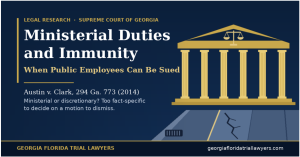
Legal Research – Ministerial Duties and Immunity

Austin v. Clark, 294 Ga. 773 (2014) P tripped...

Read More

Georgia Slip and Fall: Actual Knowledge of a Hazard

Georgia Slip and Fall: Actual Knowledge of a Hazard

In a Georgia slip and fall case, what the...

Read More

Verbal Settlement Agreement in Georgia: What Injury Victims Need to Know

A verbal settlement agreement in Georgia can carry the...

Read More

Trucking Accident Venue in Georgia: Where Can You Sue a Trucking Company?

Determining the correct trucking accident venue in Georgia is...

Read More
Negligent Retention in Georgia: When Is an Employer Liable for a Dangerous Employee?

What happens when you work with a creepy person?...

Read More


Fractures of the pubic rami

“Most people think that hip fractures are dangerous for...

Read More
FAQ'S

Frequently Asked Questions

Have questions about personal injury claims? We’re here to help. Below are some common questions our clients ask, along with clear answers to guide you through the process.

After an accident, your first priority should be safety and medical attention. Document the scene, gather witness information, and report the incident to authorities if necessary. Contacting an experienced attorney as soon as possible ensures your rights are protected and evidence is properly preserved for your claim.

In Georgia, the statute of limitations for personal injury cases is typically two years from the date of the accident. Filing within this period is crucial, as missing the deadline can prevent you from seeking compensation. Your attorney can guide you to file promptly and ensure all legal requirements are met.

Not necessarily. Many personal injury cases are settled outside of court through negotiations with insurance companies. However, if a fair settlement cannot be reached, your attorney will be prepared to take your case to trial to ensure you receive the compensation you deserve.

Most personal injury attorneys work on a contingency fee basis, meaning you pay nothing unless you win your case. This allows you to access experienced legal representation without upfront costs, making it easier for victims to pursue justice without financial stress.

Compensation is based on several factors, including medical expenses, lost wages, pain and suffering, and the severity of your injuries. Your attorney will carefully evaluate your case, gather evidence, and negotiate or litigate to maximize the compensation you are entitled to under Georgia law.